AI-Powered ERP Software: How AI and Automation Are Transforming ERP Systems
Date - 14/09/2026
Software development | 17th September
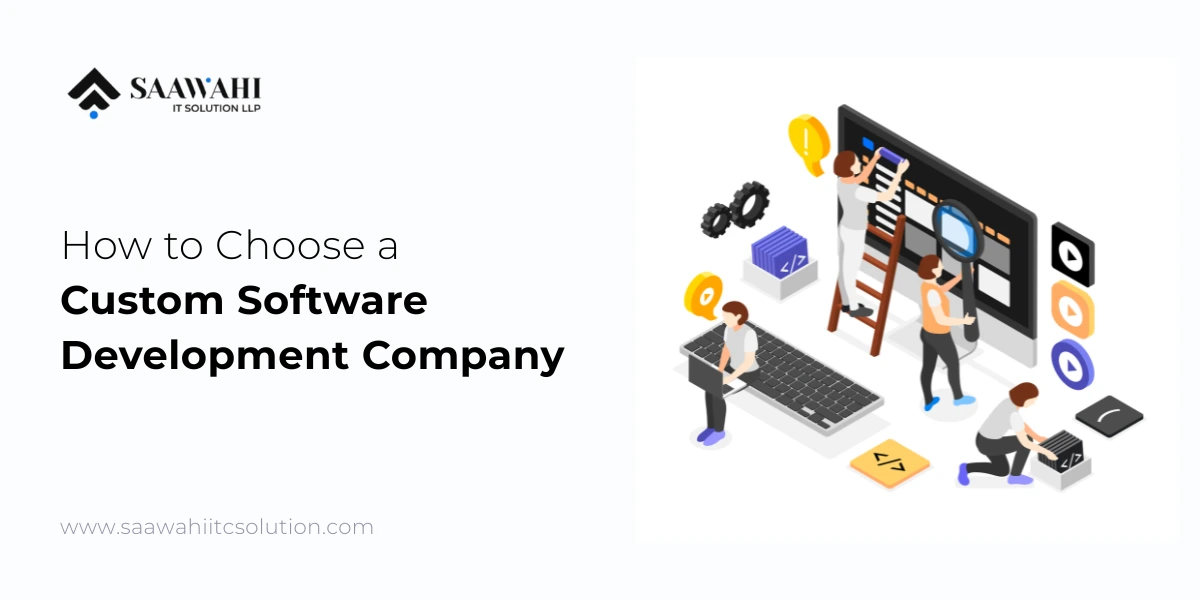
Choosing a custom software development company is not simply about finding developers who know the right programming languages. The company you choose can affect how well your software matches your business processes, how easily it can scale, how secure it is, and how much effort it takes to maintain after launch.
For startups, the decision often involves balancing speed, budget, and product requirements. For enterprises, the evaluation may also involve integrations, security, scalability, legacy systems, and multiple stakeholders.
The right development partner should therefore be evaluated on more than its portfolio or project estimate. Technical expertise, relevant experience, development methodology, communication, security practices, ownership terms, and post-launch support all matter.
This guide explains what to look for in a custom software development company and provides a practical framework for evaluating potential development partners before starting a project.
When choosing a custom software development company, evaluate:
The goal is not simply to find a company that can build software. It is to find a development partner whose capabilities, process, and delivery approach fit the requirements of your project.
A custom software development company builds software around the specific requirements of a business, product, or organization rather than adapting a general-purpose product to fit predefined workflows.
Depending on the project, a software development company may handle the full product lifecycle, from understanding business requirements through design, development, testing, deployment, and ongoing maintenance.
The scope can vary significantly. A startup developing its first SaaS product may need a relatively focused development team, while an enterprise may require complex integrations, cloud infrastructure, security controls, data migration, and long-term application support.
Before development begins, the development team needs to understand what the software is expected to accomplish.
This can include:
A clear requirements process helps identify what should be built, what can be deferred, and which technical decisions may affect the project’s cost or timeline.
For software used by employees, customers, or other end users, usability is part of the product’s effectiveness.
Depending on the engagement, a development company may help with:
Design decisions should be connected to actual user requirements rather than treated as a separate visual exercise.
This is where the planned product is translated into working software.
Depending on the project, development may involve frontend applications, backend systems, databases, APIs, cloud infrastructure, mobile applications, or other components.
The technology stack should be selected according to the project’s requirements rather than simply choosing technologies because they are currently popular.
Many business applications need to communicate with existing systems or third-party platforms.
A custom software development project may therefore include integrations with:
Integration requirements should be identified early because they can affect architecture, security, development effort, and ongoing maintenance.
Testing helps identify functional, usability, performance, compatibility, and security-related issues before and after release.
Depending on the project, quality assurance may include:
A development process that treats testing as a final step only can make defects more expensive to resolve later.
Development does not necessarily end when the application is launched.
A development company may also support:
The level of post-launch support should be agreed upon before development begins so both sides understand what happens after the initial release.
Custom software is not automatically the right choice for every organization. If your requirements are standard and can be handled effectively by an existing platform, an off-the-shelf solution may be more practical.
However, when standard software creates workflow limitations, integration problems, or scalability constraints, custom development may provide greater control. Understanding the differences between custom software and ready-made software can help you evaluate which approach fits your requirements.
Off-the-shelf software can be practical when a business has relatively standard requirements and an existing product already provides the necessary functionality.
Custom development becomes more relevant when the business has requirements that existing products cannot adequately address.
Consider custom development when:
The important question is not simply “Can we build custom software?” It is “Does custom software solve a problem that existing solutions cannot reasonably solve?”
That distinction can help businesses avoid investing in a custom application when a suitable existing solution would meet their needs.
The services offered by a custom software development company can vary based on its technical capabilities and project focus. A business should therefore evaluate services according to its actual requirements rather than selecting a provider based on the length of its service list.
Common custom software development services include:
The most important consideration is whether the company has relevant experience delivering the type of software you actually need.
A long list of technologies or services does not by itself demonstrate that a development company is suitable for your project.
Once you have established that custom development fits your requirements, the next challenge is evaluating potential development partners. A strong portfolio or competitive quote can be useful, but neither tells you enough about how a company will handle your specific project.
Use the following criteria to assess whether a custom software development company is actually suited to your requirements.
Before comparing development companies, define what you need the software to accomplish.
You do not necessarily need a complete technical specification before speaking with a development partner. However, you should have enough clarity to explain:
This gives potential development partners enough context to assess the project rather than providing a generic estimate based on a feature list.
It also makes proposals easier to compare. If every company is responding to a different interpretation of the project, comparing their prices or timelines can be misleading.
A company may list dozens of technologies, but that does not necessarily mean all of them are relevant to your project.
Look for experience with the technical areas your software actually requires, such as:
More importantly, ask why a particular technology or architecture is being recommended.
A capable development partner should be able to explain technical decisions in business terms—for example, how a proposed architecture could affect scalability, maintenance, development effort, or future integrations.
A portfolio is more useful when you look beyond screenshots and industry names.
A company that has built software for the same industry as yours may still have little experience with your project’s technical complexity.
When reviewing previous projects, consider:
You can also ask the development company to explain its role in each relevant project. This helps distinguish between work completed entirely by the company and work where it contributed only to a specific component.
A clear development process helps reduce uncertainty throughout the project.
Ask how the company moves from an initial requirement to a production-ready application.
A typical process may include:
Discovery → Requirements → Architecture → UI/UX → Development → Testing → Deployment → Support
The exact methodology can vary. Agile, iterative, or hybrid approaches can all work depending on the project.
What matters is whether the process gives your team clear visibility into:
A development process should also provide a mechanism for reviewing progress before the entire application is completed.
Software projects involve decisions throughout development, so communication can have a direct effect on delivery.
Before selecting a development company, clarify:
For larger projects, also clarify which people will be involved in discovery, development, QA, project management, and technical decision-making.
The objective is not simply to have frequent meetings. It is to establish a communication process that makes responsibilities, decisions, progress, and changes visible to both sides.
Security should be considered during architecture and development rather than added immediately before launch.
Depending on the application, ask how the development team approaches:
The specific requirements will depend on the type of software and the data it handles.
Quality assurance should also be part of the development lifecycle. Ask what types of testing are performed and when testing occurs.
For applications handling sensitive business or customer data, security requirements should be discussed during the early planning stages rather than treated as a final checklist.
Ownership should be clearly documented before development starts.
Ask who will own:
Also clarify how third-party libraries, APIs, frameworks, and other licensed components are handled.
You should know where the source code is stored, who has access to the repositories, and what happens to those assets if the development relationship ends.
These details can become important long after the initial application has been delivered.
Price should be evaluated alongside scope rather than considered independently.
Two companies can provide very different estimates for what appears to be the same project because their proposals may differ in:
Ask each company to clearly identify what is included in the estimate and what could generate additional costs.
Common pricing approaches include:
Fixed-price: The scope and price are defined for an agreed set of requirements.
Time and materials: Payment is based on development effort and agreed rates.
Milestone-based: Payments are connected to defined project stages or deliverables.
There is no single pricing model that fits every project. The important part is understanding how scope, changes, deliverables, and additional work affect the final cost.
Launching the software is only one stage of its lifecycle.
Before signing an agreement, ask what happens after deployment.
Clarify whether the company provides:
Also ask whether post-launch support is included in the initial project or handled through a separate agreement.
A clear support arrangement can make it easier to manage the application as requirements change after launch.
If you are looking for a software development company in the USA, location alone should not determine your decision. A company may have a U.S. presence or serve U.S. businesses, but what matters is whether its capabilities, development process, communication model, and delivery experience match your project requirements.
Searches such as “Best software development company USA” can help you discover potential providers, but search rankings or marketing claims are not enough to determine whether a company is suitable for a particular project.
Use a consistent evaluation process when comparing potential development partners.
Start by examining whether the company has delivered projects comparable to yours.
Look beyond industry labels and consider:
A company that has built a simple internal application may not necessarily have the experience required for a complex enterprise platform.
Ask potential providers to explain how they approach a project from discovery through deployment.
A useful discussion should cover:
Pay attention to whether the company explains these stages clearly or focuses primarily on its technology stack and promotional claims.
For U.S.-based businesses, communication requirements can vary depending on where the development team is located.
Ask about:
The goal is to establish whether both teams can collaborate effectively throughout the project.
Security requirements depend on the type of application and the data it handles.
For projects involving customer information, financial data, healthcare information, employee records, or other sensitive data, discuss security requirements during the planning stage.
Ask potential development partners how they approach:
Where specific regulatory or contractual requirements apply, confirm that the development approach can accommodate them.
When comparing several companies, avoid putting the proposals into a simple lowest-to-highest price order.
Instead, compare what each proposal actually includes.
For example:
| Evaluation Area | What to Compare |
| Scope | Features and functionality included |
| Architecture | Proposed technical approach |
| Timeline | Milestones and delivery assumptions |
| QA | Testing activities and responsibilities |
| Deployment | Infrastructure and release support |
| Documentation | Technical and user documentation |
| Ownership | Source code and IP terms |
| Support | Post-launch services |
| Changes | Process for handling new requirements |
This makes the comparison more meaningful because a lower estimate may exclude work that another provider has included.
Before signing a contract, verify the information that matters to your project.
You can ask for:
The objective is not to collect the largest number of testimonials. It is to establish whether the company’s stated capabilities are relevant to the project you are planning.
A software application can require changes well beyond its initial launch.
Your business may eventually need:
Therefore, when evaluating a software development company, consider whether it can support the application after the initial delivery or whether you will need to transition to another provider.
A development partner should be evaluated not only on its ability to build the first version, but also on how clearly it can support the software’s expected lifecycle.
Before choosing a custom software development company, ask questions that reveal how the company approaches requirements, development, quality, communication, ownership, and long-term support.
A strong conversation before the project begins can uncover differences between development partners that may not be visible in their websites or portfolios.
Ask about projects that are comparable in technical complexity and functionality, not just industry.
For example, if your project requires multiple third-party integrations, complex user permissions, real-time data, or a large number of users, ask whether the company has handled similar requirements.
Also clarify what role the company played in those projects.
Ask how the team turns your business requirements into a development plan.
A useful process may include:
This helps reduce misunderstandings before development begins.
Requirements can change as users provide feedback or business priorities evolve.
Ask:
A defined change-management process makes project expectations easier to manage.
Do not evaluate only the company. Understand the team that will actually deliver your software.
Ask about the roles involved, such as:
For specialized projects, you may also need roles involving data engineering, AI, cybersecurity, or other technical areas.
Ask what testing will be performed and when.
Depending on the application, this may include:
You should also understand who is responsible for identifying and resolving defects before release.
This should be clearly defined in the agreement.
Ask:
Clear ownership terms can reduce complications if you later change development partners.
Ask how your team will know what is being completed and what requires attention.
Clarify:
For enterprise projects, also establish who has authority to approve requirements and changes.
Ask the company to explain the assumptions behind its estimate.
Check whether the proposal includes:
A proposal should make it reasonably clear what the quoted amount covers and which items may be charged separately.
Ask what support is available after deployment.
Important areas include:
If ongoing support is provided under a separate agreement, understand the terms before development begins.
A project should have measurable outcomes beyond simply reaching a launch date.
Depending on the software, success could involve:
Defining these outcomes helps keep development connected to the business problem the software was intended to solve.
Selecting a custom software development company based only on its website, portfolio, or initial quote can create problems later. Many project issues begin before development starts because requirements, responsibilities, ownership, or expectations were not clearly established.
Avoiding these common mistakes can make the selection process more structured and reduce preventable risks.
A lower estimate does not necessarily mean lower development costs overall.
Two proposals may have different assumptions about features, testing, infrastructure, documentation, or support. If these differences are not identified, a cheaper initial estimate can change as additional requirements are introduced.
Instead of comparing only the final price, compare:
The objective is to understand the total scope behind each estimate.
A company may have experience with your preferred programming language or framework, but technology alone does not demonstrate that it can deliver your specific product successfully.
A better evaluation considers how the team applies technology to:
The right technology should support the product requirements rather than become the starting point for the entire decision.
A portfolio can demonstrate previous work, but screenshots and project names provide limited information about how a project was delivered.
Ask what the development company actually contributed.
For example:
Understanding the company’s actual role gives you a more accurate view of its relevant experience.
Some businesses begin development with a broad idea and expect requirements to become clear during coding.
Exploration is normal, particularly for startups, but critical requirements should still be documented and prioritized before significant development begins.
At minimum, both sides should have a shared understanding of:
This creates a reference point when new ideas or changes arise.
Ownership should never be left to assumptions.
Before development starts, confirm who owns the custom software, source code, documentation, designs, and other project assets.
Also understand how third-party libraries and licensed technologies are handled.
These details become especially important if your organization later needs to maintain the software internally or work with another development partner.
A project does not necessarily end when the application is deployed.
Businesses may later need security updates, bug fixes, infrastructure changes, performance improvements, or new features.
Failing to discuss these requirements before signing an agreement can make post-launch costs and responsibilities unclear.
Ask what support is available, how it is priced, and who is responsible for maintaining the production environment.
A long feature list does not automatically produce a successful software product.
For example, a business may request several automation features when the actual objective is to reduce manual processing time.
Before approving features, connect them to the problem they are intended to solve.
A useful question is:
What business outcome is this feature expected to improve?
This helps prioritize functionality and can prevent unnecessary development work.
Your initial software requirements may change as your business grows.
A startup may begin with a focused MVP and later require additional users, integrations, reporting, automation, or new platforms. An enterprise application may need to connect with additional systems over time.
During the selection process, discuss likely future requirements without turning every possible future feature into part of the initial scope.
The goal is to understand whether the proposed architecture and development approach can accommodate reasonable future growth.
Software projects often involve multiple stakeholders. Without clear ownership of decisions, approvals can become slow or contradictory.
Before development begins, identify:
Clear responsibilities can reduce delays and keep communication organized throughout development.
Startups and enterprises can both benefit from custom software, but their development priorities are often different. A startup may need to validate an idea quickly with a focused product, while an enterprise may need to integrate new software with existing systems, processes, and security requirements.
Because of these differences, the right custom software development company should be evaluated according to the environment in which the software will be developed and used.
For startups, speed and flexibility are often important because the product may still be evolving.
A development partner should be able to help the startup distinguish between essential functionality and features that can be introduced later.
Important considerations include:
Startups should also avoid building every planned feature into the first release. A focused scope can make it easier to test assumptions and decide what should be developed next.
Enterprise software projects often involve more stakeholders, existing technology environments, and complex business processes.
An enterprise may need to evaluate a development partner’s ability to handle:
Enterprise buyers should also establish governance early. Requirements, approvals, technical decisions, security reviews, and release processes may involve different teams.
| Area | Startups | Enterprises |
| Primary focus | Product validation and growth | Operational efficiency and scale |
| Initial scope | Often focused on an MVP | Often broader and system-oriented |
| Requirements | Likely to evolve quickly | Often involve multiple stakeholders |
| Integration | May be limited initially | Often a major requirement |
| Architecture | Flexible and growth-ready | Must work with existing systems |
| Budget | Strong focus on prioritization | Strong focus on predictability and governance |
| Security | Depends on product and data | Often a significant planning consideration |
| Support | May scale with the product | Often requires structured long-term support |
These differences do not mean startups should ignore security or enterprises should avoid iterative development. They show why the development approach should be aligned with the organization’s actual requirements and operating environment.
Before selecting a development partner, consider where your organization is today and where the software needs to take you.
A startup developing a new SaaS product may prioritize product discovery, MVP development, and rapid iteration. An established enterprise replacing a legacy system may place greater emphasis on integration, migration, security, and continuity.
In both cases, the most useful question is not simply whether a company has built software before. It is whether the company has experience dealing with the specific constraints and priorities of your type of project.
That distinction can help narrow the list of potential development partners before moving into detailed proposals and contracts.
Before selecting a custom software development company, review the potential partner against the requirements that matter most to your project. A simple checklist can help turn a broad comparison into a more structured evaluation.
A development company does not need to satisfy every item in exactly the same way for every project. The importance of each criterion depends on the software being built, the organization’s size, technical environment, budget, and long-term objectives.
The purpose of the checklist is to make those differences visible before a development partner is selected.
Choosing a custom software development company is ultimately a matter of finding a suitable match between your business requirements and the development partner’s capabilities.
A strong evaluation should go beyond price, technology lists, and polished portfolios. Look at relevant experience, requirements analysis, development processes, security practices, communication, ownership, and post-launch support.
For startups, the priority may be finding a partner that can turn an idea into a focused product while adapting to changing requirements. For enterprises, the evaluation may place greater emphasis on integration, security, scalability, governance, and long-term support.
The most useful approach is to define what your project actually requires first and then discuss your software development requirements against the same criteria. This makes it easier to compare proposals based on scope, capability, delivery approach, and long-term fit, rather than relying on marketing claims or the lowest initial estimate.
Start by defining your business requirements, target users, core functionality, integrations, and expected outcomes. Then evaluate potential companies based on relevant project experience, technical expertise, development process, communication, security practices, ownership terms, pricing transparency, and post-launch support.
The right company should be able to explain how its approach fits your specific project rather than simply presenting a list of technologies or previous projects.
Look for relevant technical and delivery experience, a clear development process, transparent communication, quality assurance practices, security awareness, clear intellectual-property terms, and appropriate post-launch support.
It is also important to determine whether the company has handled projects with similar complexity, integrations, users, and business requirements.
There is no single price for custom software development. Cost depends on factors such as project scope, functionality, integrations, technology architecture, design requirements, development effort, testing, infrastructure, and ongoing support.
A useful estimate should explain the assumptions behind the price and identify what is included, excluded, or likely to create additional costs.
Development time depends on the project’s scope and complexity. A focused MVP may require considerably less time than a large enterprise application involving multiple integrations, complex workflows, data migration, or extensive testing.
A development company should break the project into defined stages or milestones so that the expected timeline and dependencies can be evaluated rather than relying on a single delivery date.

Wama Sompura is the CEO of Saawahi IT Solution, leading innovations in AI, automation, and digital solutions that help businesses drive efficiency and growth.
© Copyright 2025 All Rights Reserved. Saawahi IT Solution LLP.